Have you ever brushed off your shoulders, noticed a dusting of white flakes, and immediately reached for the strongest anti-dandruff shampoo on the shelf? You are not alone. However, that knee-jerk reaction might actually be making your problem much worse.
While both conditions result in flakes and an itchy head, dandruff and dry scalp are two entirely different issues with completely opposite treatments. Treating a dry scalp with harsh dandruff shampoo is like throwing gasoline on a fire.
Here is the definitive guide to diagnosing your scalp and stopping the snowstorm for good.
1. Dry Scalp: The Dehydration Problem
Just like the skin on your hands or face can dry out, so can the skin under your hair. When your scalp loses too much moisture, the skin becomes irritated, cracks, and flakes off.
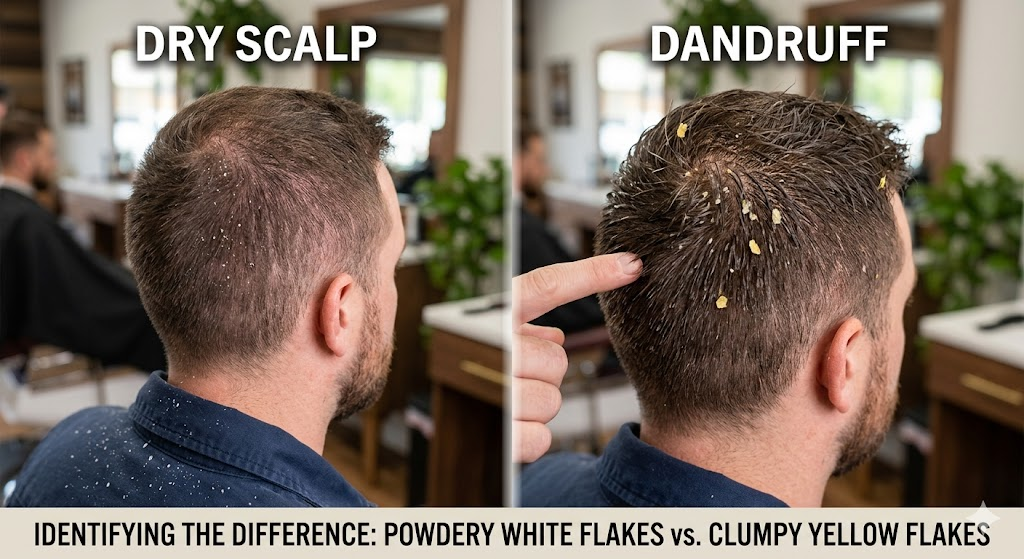
- The Symptoms: The flakes are usually small, very white, and dry. They fall off your head and onto your clothes easily. Your scalp might feel tight, dry, and mildly itchy.
- The Causes:
- Washing your hair too frequently.
- Using shampoos with harsh sulfates that strip away your natural oils.
- Taking excessively hot showers.
- Cold, dry weather (especially during the winter months).
- The Solution: You need hydration, not medication. Switch to a gentle, moisturizing, sulfate-free shampoo. Wash your hair less often (try 2 to 3 times a week instead of daily). You can also introduce a lightweight, natural scalp oil (like jojoba or tea tree mixed with a carrier oil) before washing to help restore your skin’s moisture barrier.
2. Dandruff: The Oil and Fungus Problem
Unlike a dry scalp, true dandruff is usually caused by too much oil. There is a naturally occurring, yeast-like fungus on everyone’s scalp called Malassezia. For some men, this fungus feeds on excess sebum (oil), multiplies too quickly, and causes skin cells to shed at a rapid, unnatural rate.
- The Symptoms: The flakes are larger, often yellowish, and feel oily or greasy. They tend to clump together and stick to your hair rather than falling off immediately. Your scalp will be intensely itchy and possibly red or inflamed.
- The Causes:
- Overproduction of scalp oil (sebum).
- Not washing your hair enough, allowing oil, sweat, and dead skin to build up.
- Sensitivity to hair products (contact dermatitis).
- Stress, diet, or genetics.
- The Solution: You need to control the oil and fight the fungus. You should wash your hair more frequently using a medicated anti-dandruff shampoo containing active ingredients like Zinc Pyrithione, Ketoconazole, or Salicylic Acid. Do not add extra beard oils or heavy pomades directly to your scalp, as the extra moisture will only feed the yeast.
The Quick Diagnosis Table
Still not sure what you are dealing with? Use this quick cheat sheet to figure out what is happening on your head:
| Feature | Dry Scalp | Dandruff |
|---|---|---|
| Flake Appearance | Small, white, dry, powdery | Large, yellowish, oily, clumpy |
| Scalp Feeling | Tight and dry | Oily, greasy, highly irritated |
| Itch Level | Mild to moderate | Intense and persistent |
| The Quick Fix | Moisturize and wash less | Medicated shampoo and wash more |
The Bottom Line
The next time you spot flakes, take a closer look before you treat them. If your flakes are small and dry, step away from the aggressive chemical shampoos and focus on hydration. If they are large and oily, grab the medicated shampoo, leave it on your scalp for a few minutes in the shower, and let it do its job.
Pro Tip: If you have correctly identified your issue, tried the right treatments for a few weeks, and your scalp is still inflamed, red, or fiercely itchy, it is time to step out of the barber’s chair and book an appointment with a dermatologist.